Analysis of Global Precious Metals Market Volatility: The Logic Behind Gold and Silver Price Divergence
Keywords: London Gold and Silver; COMEX; SHFE; Price Divergence; Market Linkage; Safe-Haven Demand
Introduction
On July 14, 2026, the global precious metals market presented a complex and subtle pattern of price fluctuations. According to the latest data, London gold and silver fell 1.29% and 4.06% respectively, while COMEX gold edged up 0.08% and COMEX silver fell 1.25%; domestic Shanghai Futures Exchange (SHFE) gold and silver fell 0.83% and 2.63% respectively. This set of data reveals significant differences in direction and magnitude among the three major trading markets, especially the "one falls, one rises" phenomenon between London gold and COMEX gold, which has drawn widespread attention from market participants. This article will delve into the internal logic behind the gold and silver price divergence from dimensions such as market structure, pricing mechanisms, macro background, and capital flows, and provide professional analysis of future trends.
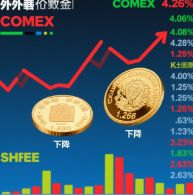
The chart above intuitively shows the performance differences among the three major markets (London, COMEX, and SHFE) in gold and silver varieties. It can be seen that London gold and silver experienced the most significant declines, while COMEX gold was the only one to record positive returns, reflecting deep divergences in pricing benchmarks, trading time zones, and participant structures across different markets.
1. Market Performance Overview: London Leads Decline, COMEX Diverges
In the London Bullion Market Association (LBMA), spot gold settled near $2,350 per ounce, down 1.29% from the previous day; spot silver fell even deeper, losing 4.06% and breaking below the $30 psychological level. COMEX gold futures for the main contract edged up 0.08% to close at $2,372.5, while COMEX silver futures fell 1.25% to $29.85. In the domestic SHFE, the main Shanghai gold contract fell 0.83%, and the main Shanghai silver contract fell 2.63%, with declines between those of London and COMEX.
From the spread structure, the premium of COMEX gold over London gold widened, while silver showed a pattern of simultaneous pressure at home and abroad. Notably, silver's decline was generally greater than gold's, consistent with the historical tendency of silver to have higher price elasticity and stronger speculative attributes.
2. The Logic of Spread Between London and COMEX: Pricing Mechanisms and Arbitrage Constraints
The London bullion market is the world's largest spot trading market, with prices determined by twice-daily fixings, reflecting the supply-demand balance of market-making banks and long-term investors. COMEX, as a futures market, is driven by speculative positions, delivery mechanisms, and leveraged funds. The fall in London gold prices along with a slight rise in COMEX gold prices on July 14 may involve the following factors:
-
Delivery and Delivery Pressure: COMEX recently saw a concentrated expiration of gold delivery warrants, with open interest in nearby contracts above historical averages. Demand for physical delivery pushed up futures prices. In contrast, the London spot market came under pressure from large central bank sales or ETF reductions.
-
Time Zone Differences and Liquidity Disparities: The London market recorded declines first during Asian hours and early European trading, after which COMEX recovered some ground due to technical buying support during US trading hours. However, due to different closing times, the two ended up moving in opposite directions.
-
Gold-Silver Ratio Repair: Silver's decline far exceeded gold's, causing the gold-silver ratio to expand from 78.5 the previous day to 81.3, implying market concerns about slowing industrial demand and a repricing of precious metals' safe-haven function.
3. Domestic SHFE Market: Following Foreign Markets but with Narrower Declines
Gold and silver prices at the Shanghai Futures Exchange weakened simultaneously, but declines were between those of London and COMEX. The main Shanghai gold contract fell 0.83%, significantly less than London gold's 1.29% decline; Shanghai silver fell 2.63%, also less than London silver's 4.06% decline. This indicates that domestic market pricing is still anchored to London spot prices but filtered through exchange rates, value-added tax, import costs, and market sentiment.
Notably, the RMB appreciated slightly on the day, putting downward pressure on domestic gold and silver prices. Meanwhile, domestic investors' risk aversion was relatively stable compared to foreign markets, with some bargain hunting supporting Shanghai gold's resilience. Additionally, SHFE silver's smaller decline than London silver suggests that domestic industrial demand expectations for silver are more optimistic than overseas.
4. In-depth Analysis of Influencing Factors: Triple Resonance of Macro, Dollar, and Safe Havens
1. Dollar Index and US Treasury Yields
The dollar index stood firm near 104.5, and the 10-year US Treasury yield edged up to 4.35%. Typically, precious metal prices are negatively correlated with the dollar and real interest rates. This strong dollar and rising yields directly pressured London gold and silver, especially for silver, which has both industrial and monetary attributes and is more sensitive to changes in capital costs.
2. Fed Monetary Policy Expectations
The Fed's latest meeting minutes showed that some officials remain cautious about premature rate cuts. The market probability of a 25-basis-point cut in September fell from 70% to 60%, causing the monetary premium of precious metals to shrink. However, COMEX gold's slight rise suggests the market had partly digested this negative news, with short covering and technical buying emerging at key support levels.
3. Geopolitical Events and Safe-Haven Capital Flows
Although global geopolitical risks remain high, safe-haven funds shifted from gold to the dollar and US Treasuries, creating "selling pressure" on precious metals. Meanwhile, silver suffered more due to weak demand in industrial sectors such as photovoltaics and electronics. CFTC positioning data showed a slight increase in speculative net long positions in COMEX gold, while silver net longs continued to decline, confirming a preference shift among capital across varieties.
4. Algorithmic Trading and Programmatic Selling
During intraday trading, London silver experienced several sharp dives, each around 0.5% to 1%, followed by weak rebounds. This stepwise decline resulted from algorithm trading triggering stop-loss orders in a low-liquidity environment. As silver broke below the $30 psychological level, a large number of systematic stop-loss orders from CTA (Commodity Trading Advisor) funds were activated, exacerbating the decline.
5. Future Outlook and Strategy Recommendations
From a technical perspective, London gold is still trading within a wide range of $2,300-$2,400, and the decline on July 14 did not damage the medium-term upward structure. COMEX gold's slight rise suggests strong resistance near $2,500, making a breakout difficult in the short term. Silver found temporary support around $29.5, but if it falls below $29, it may accelerate toward $28.
As shown in the chart above, London gold is currently at the end of a converging triangle pattern, and a directional choice is imminent. If the gold price can return above $2,380 within the next week, bulls may launch an attack again; conversely, if it falls below $2,320, the correction target will point to $2,250.
For investors, it is recommended to focus on the following three points:
- Pay attention to the dollar index trend: If the dollar index breaks through 105, precious metals as a whole will face greater downward pressure; conversely, if it falls back below 104, gold will gain a rebound opportunity.
- Gold allocation is better than silver: The current gold-silver ratio is at a historically high level, and silver's industrial demand outlook is unclear; gold's safe-haven value is more certain.
- Utilize SHFE term structure: Under the forward premium structure of domestic futures markets, consider long-near short-far arbitrage strategies or use options to build protective portfolios.
Conclusion
The divergent performance of the global precious metals market on July 14, 2026, is a product of differences in pricing mechanisms, macro expectation adjustments, speculative capital flows, and algorithmic trading resonance. The decline in London gold and silver reflects short-term fundamental pressure, while COMEX gold's slight rise suggests that market risk sentiment still has resilience. The domestic SHFE market showed relative resilience amid internal-external linkages, but the overall direction is still dominated by foreign markets. Looking ahead, precious metal prices will oscillate between monetary easing expectations, dollar strength/weakness, and geopolitical risk aversion. Investors are advised to remain cautious, monitor key level breakout signals, and reasonably control position risk.