Value Revaluation of Precious Metals: Seeking Stability and Opportunity in Uncertain Times
Keywords: Precious metals, gold, silver, safe-haven assets, inflation hedge, asset allocation, market cycles
Introduction
Against a backdrop of heightened global economic volatility, rising geopolitical risks and ongoing monetary policy adjustments, precious metals have once again become a focus for investors. As assets with both financial, commodity and scarcity attributes, precious metals not only serve traditional wealth preservation functions but also occupy a unique position in modern asset allocation systems. Whether it is gold's safe-haven value or the industrial applications of silver, platinum and palladium, precious metals demonstrate cross-cycle, cross-market comprehensive value.
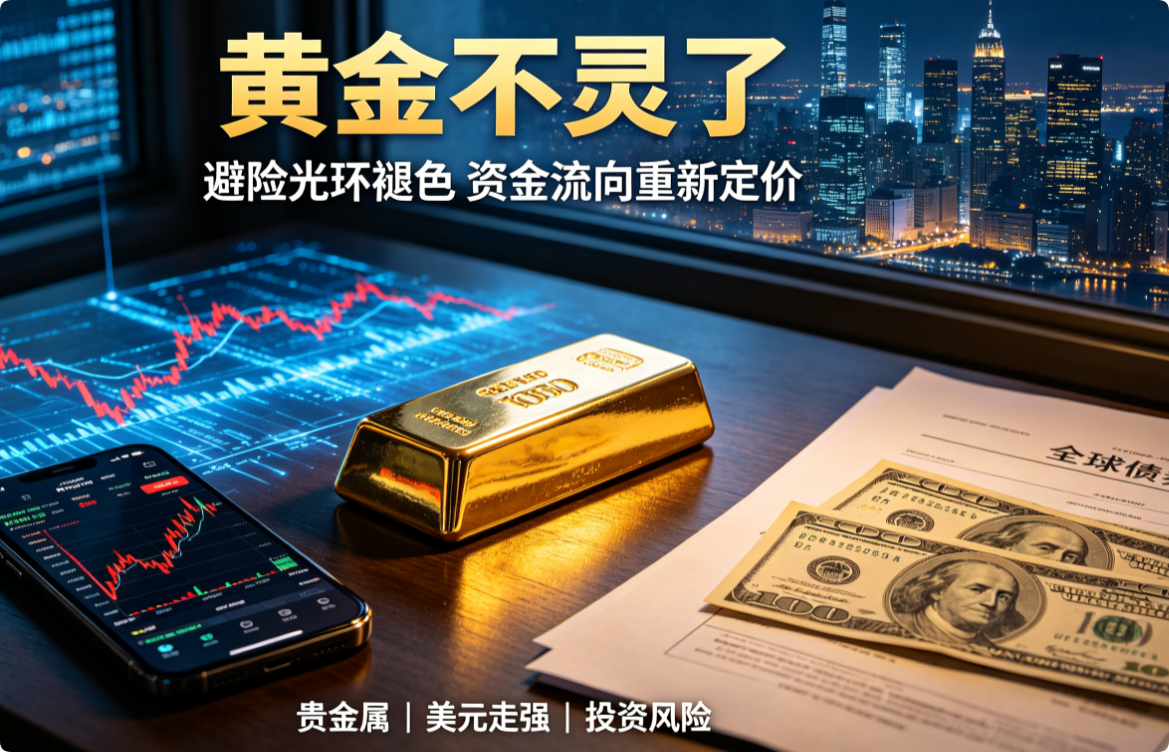
Historically, when economic growth slows, inflation pressures rise or market confidence wanes, precious metals often exhibit strong risk resilience. This characteristic makes them an important allocation option for institutional and individual investors in complex environments. The following chart can serve as one reference for market observation and trend analysis:
I. Why Precious Metals Have Long-Term Value
The fundamental reason precious metals are favored long-term is their scarcity and irreplaceability. Compared to ordinary commodities, the supply growth of precious metals is relatively slow, mining costs are high, and resource distribution is concentrated, which gives them a natural scarcity premium in the global asset system.
1. Gold: The most typical safe-haven asset
Gold is widely regarded as the "ultimate currency." Its core value comes not entirely from industrial use but from the market's long-term recognition of its credit attributes. During currency depreciation, rising inflation or sharp financial market volatility, gold typically provides stable value anchoring. Especially against the backdrop of global central banks continuously increasing gold reserves, gold's strategic significance has further strengthened.
2. Silver: Dual attributes of finance and industry
Silver is both a precious metal and an important industrial metal, widely used in photovoltaics, electronics, medical devices and high-end manufacturing. Compared to gold, silver prices tend to be more volatile, thus offering higher elasticity but also higher risk. For investors focusing on growth and cyclical opportunities, silver is often a worthwhile tracked asset.
3. Platinum and Palladium: Structural opportunities in industrial upgrades
Platinum and palladium play irreplaceable roles in automotive exhaust purification, chemical catalysis and hydrogen energy technology. With the development of new energy and green manufacturing, the demand structure for these precious metals is changing. Although their prices are heavily influenced by supply and demand, in the long term, related industrial upgrades are expected to create new value space.
II. Core Factors Influencing Precious Metal Prices
Precious metal prices are not determined by a single factor but are jointly influenced by multiple variables including the macro environment, market sentiment and supply-demand structure. Understanding these factors helps in more rationally judging their trends.
1. Dollar trend and real interest rates
Generally, a stronger dollar puts pressure on precious metal prices, while a weaker dollar tends to benefit them. The reason is that precious metals are priced in dollars; a stronger dollar raises the purchase cost for holders of other currencies. Additionally, real interest rates are a key indicator: when real interest rates fall, the opportunity cost of holding non-yielding assets like gold decreases, making precious metal prices more likely to rise.
2. Inflation expectations and monetary policy
During periods of rising inflation, precious metals are often seen as important inflation-hedging tools. If the market expects central banks to slow rate hikes or shift to easing, precious metals typically reflect this expectation in advance. Conversely, if tightening policies persist, precious metals may face short-term pressure. Thus, precious metal prices are often closely correlated with monetary policy cycles.
3. Geopolitics and safe-haven demand
Events such as war, international tensions and financial system risks significantly increase the attractiveness of safe-haven assets. Gold's performance under such circumstances is particularly notable because it is not only an asset but also a globally accepted "safe harbor."
4. Physical supply-demand and industrial demand changes
Apart from gold, the prices of silver, platinum and palladium are also closely related to industrial demand. For example, the expansion of the photovoltaic industry drives silver demand, while upgrades in automotive emission standards affect the application structure of platinum and palladium. Supply-demand imbalances, changes in mine output and recycling scale also directly impact prices.
III. Practical Significance of Precious Metals in Asset Allocation
In modern investment portfolios, the role of precious metals is not just "buy and wait for a rise," but more importantly to assume the function of risk balance and portfolio stability. Especially during periods when assets such as stocks, bonds and real estate move in the same direction, precious metals can provide a certain degree of diversification.
1. Guarding against systemic risk
When financial markets experience strong uncertainty, precious metals often provide good defensive attributes. They do not rely on the credit of a single country nor are they directly affected by corporate performance, making them more suitable as stabilizers in asset allocation.
2. Optimizing portfolio volatility
From a portfolio perspective, appropriate allocation to precious metals helps reduce overall volatility. Even though precious metals themselves are influenced by market sentiment, their correlation with risk assets like stocks is not always highly consistent, thus they have practical significance in diversifying risk.
3. Enhancing response to extreme scenarios
In the face of extreme scenarios such as out-of-control inflation, currency devaluation or escalated geopolitical conflicts, precious metals can help investors preserve purchasing power. For long-term fund managers, this "crisis hedging" value far exceeds short-term price fluctuations.
IV. Risks to Note When Investing in Precious Metals
Although precious metals have strong allocation value, they are not risk-free assets. Ignoring volatility and market rhythm can lead to unnecessary losses in operations.
1. Price fluctuations may amplify short-term losses
Precious metals, especially silver and palladium, have high price elasticity and notable short-term volatility. If blindly chasing highs, one may suffer significant losses during corrections. Therefore, investors should avoid making decisions based solely on emotion or market heat.
2. Logic varies significantly across different varieties
Gold is suitable for relatively stable long-term allocation, while silver is more biased towards cyclical and elastic investment; platinum and palladium are more closely linked to industrial demand. Different precious metals cannot be simply substituted for each other; choices must be made based on one's own goals.
3. Liquidity and transaction costs cannot be ignored
Physical precious metals, paper gold, precious metal ETFs, futures and other instruments each have their own characteristics. Physical holding is more suitable for long-term value preservation but has higher transaction and storage costs; financial derivatives have stronger liquidity but also higher risk management requirements. Investors should choose appropriate instruments based on their own risk tolerance.
V. Future Trends in the Precious Metals Market
From a medium- to long-term perspective, the precious metals market still has strong structural support. On one hand, global debt levels remain high, and the monetary system faces long-term adjustment pressures; on the other hand, green transformation, industrial upgrades, and new energy development are continuously reshaping the demand landscape for varieties like silver.
Meanwhile, the trend of global central banks persistently increasing gold holdings indicates that gold's strategic asset status is strengthening. For ordinary investors, this means that precious metals are no longer just short-term tools to "buy during safe-haven periods" but should become an indispensable part of long-term asset allocation.
However, precious metal prices are not one-sidedly rising. Future price drivers will still revolve around real interest rates, the dollar trend, inflation expectations and geopolitical situations. Those who can more accurately understand macro cycles are more likely to grasp opportunities in the precious metals market.
Conclusion
The value of precious metals comes both from their scarcity and from the market's sustained demand for safety and stability in uncertain environments. Gold represents credit substitution and wealth preservation, silver represents dual attributes of finance and industry, while platinum and palladium reflect the underlying logic of industrial structure and technological change. For investors, precious metals are not just simple price games but an important window to understand macroeconomics, risk preferences and asset allocation logic.
In a future market full of variables, rationally understanding and scientifically allocating precious metals will help enhance the resilience and risk resistance of investment portfolios. True mature investment lies not in chasing every fluctuation, but in remaining stable through cycle changes and finding certainty amid uncertainty. Precious metals are an important source of this certainty.